
RV Roof Repair: Seal a Front Cap with Outdoor Silicone
Dave SolbergIt’s important to protect your RV from the elements, especially when it comes to leaks and moisture damage, and the roof is the first place to check when completing exterior maintenance on your vehicle. Particularly with RV roof repair, components that are prone to cracking and separating, such as the roof’s front cap, should be inspected regularly for any new gaps and breaks in weatherproof lining.
When loose, in addition to causing unwanted leaks, the front cap on an RV roof can vibrate and rattle and crack further creating a much more expensive fiberglass cap repair.
To make sure you don’t wake up in the morning to a surprise puddle or destructive mold, Dave Solberg teaches a basic RV roof repair technique for easily taking care of minor gaps and sealant issues and preventing future ones by using outdoor silicone.
All it takes to fix a seam or separation and prevent water from leaking into your RV are a small amount of silicone and a sure foot; just apply small beads directly to those spots where you can see a gap, smooth away any excess and make sure to let the new seal settle before you hit the highway.
Generally, if there is an oversized seam or too many cracks in the lining, RV roof repair experts will recommend that you strip the front cap and reseal the entire component with a product such as EternaBond, which is applied like duct tape and stops major leaks, but for minor repairs you’re better off using a few quick dabs of silicone.
During your visual inspection of the roof, you may have come across a seam or some silicone that's starting to separate. We have a case of that one here on this front to roof cap here to the roof area. You'll notice this cap is very flexible as I've pushed this down, you can see how this moves here so it's really important that this silicone up here is completely intact. And I do have a spot here and a spot here now it's not too bad but I definitely wanna get it taken care of before I let it get any worse than this 'cause I'm gonna start to get water, moisture up in here. So with this one, if I had a whole seam like that I'd probably take this whole thing off and reseal it, maybe use some EternaBond or something to that effect but a small one like this, I'm just gonna use some outdoor silicone.
I'm just gonna do a nice little beat on there. Work it in really good, make sure it... And then this one. Yeah, let's see we go all the way around these side here. And so it's important when you're up on a roof like this, you make sure you get your footing right, you know where you're at, give yourself a little bit of room, don't ever go up on top of the roof with a wet surface up here.
So, I'm able to just come in here, work that into that seam. And just that little bit of added . Clean this up a little bit. So that'll take care of that, I'll keep any moisture from coming in that's why it's important to get up here once a year and have this visually inspected. That silicone could pull away in a matter of about six to eight months depending on weather, vibration, road, you know the word vibration we get, we're putting these things 70 miles an hour down the road so a little bit of preventative maintenance and you won't have water leaks inside your roof cap.
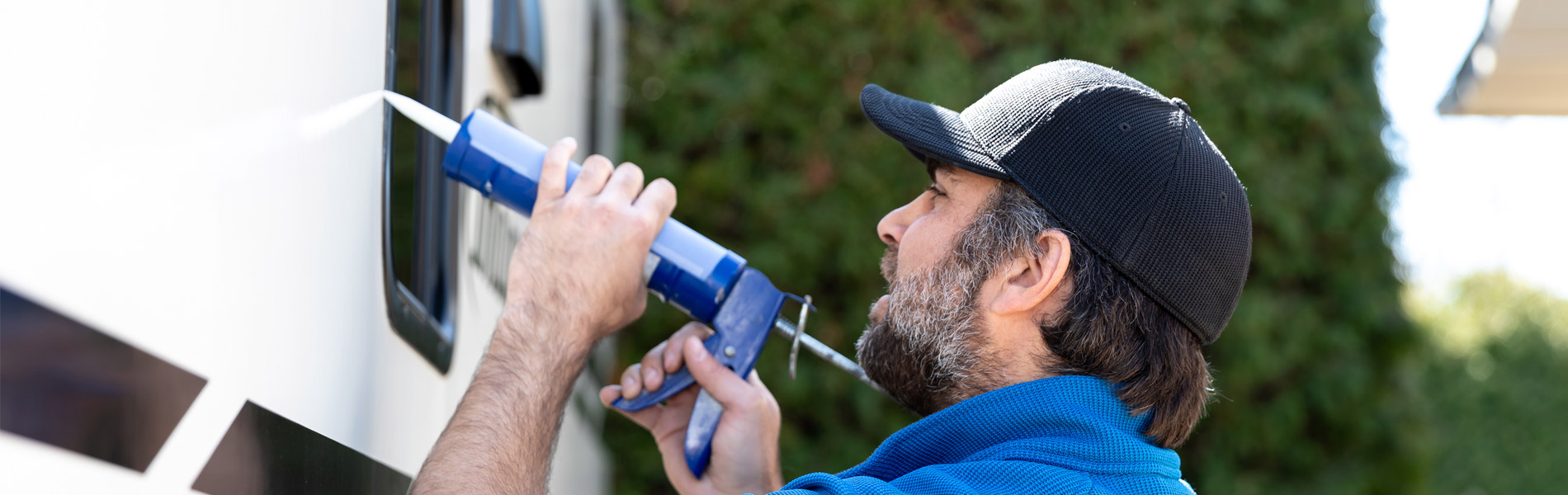
Since when is Power Grab silicone? Not impressed with the application, no pre-clean with alcohol so the new "silicone" will stick.
A highly respected RVDA/RVIA certified tech in the RV world wrote recently "Never use silicone sealant on an RV roof or any of the fixtures. Silicone is incompatible with RV roof sealants and if it has to be replaced, the new sealant won't stick to it." Your article re the front cap seems to be at odds with this recommendation.
Confused on the advice to use silicone. We where told to never use silicone on our RV, that it does not perform well, that the movement causes it to pull away from the surface allowing water to get under it. We are currently re-caulking and have found this advice to be accurate. We were told to use a flexible sealant such as ProFlex RV for the walls and a Dicor type product for the roof.
silicone???? the rest of the entire world advises against silicone based caulks...is this because you are not sealing a place that the rubber roof contacts??